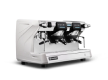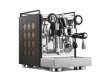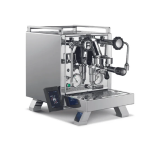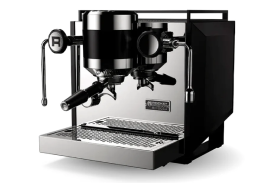
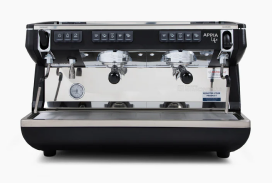
3 Group Commercial Espresso Machines

A 3 group espresso machine buys you a third station for the hour that actually hurts. One barista on espresso, one on milk, and a group still free when four more orders land at once. Most single-site cafes never need that, and roughly seven in ten run happily on two. The ones that do need it usually know already: a queue that backs up before 10am, catering running alongside the counter, or a group you want kept free for a second roast. If that is your morning, the third group pays for itself in the drinks you stop losing.

Do You Actually Need a Third Group, or Just a Bigger Boiler?

Most single-location shops run fine on two groups, roughly seven in ten of them, and a third group only earns its keep once volume genuinely demands it: consistently past 50 to 60 drinks an hour at peak, two baristas working back to back with no gap between pulls, or shots going to the counter and a catering order at the same time. Below that line a 2 group commercial espresso machine covers the rush on a smaller footprint and lower running cost, so clock your real peak-hour ticket count before sizing up.

A third group does not come with a third pair of hands. Most bars run on two people whatever the group count, one pulling and dosing espresso, one steaming and pouring milk, so a spare group with nobody to work it just sits there. Getting genuine throughput out of three takes closer to three people working in parallel, which is a staffing level most cafes only reach at peak, if at all.

Which is why a lot of operators who move up to three groups are really buying the boiler. Steam recovery under back-to-back milk drinks is what breaks down first in a rush, not shot-pulling capacity, and the larger steam boiler simply comes with the larger frame. If that is your actual bottleneck, a multi boiler espresso machine separates brew and steam temperature outright and is worth comparing before you pay for a group you will not staff.

If you do go to three, dosing method decides how much of that third group you get back. Semi automatic espresso machines leave timing to the barista, volumetric groups pull a set volume every time so a rotating staff still gets a consistent pour, and auto gravimetric espresso machines weigh each shot and cut off by weight, the tightest of the three. Already past what three groups handle at peak? A 4 group commercial espresso machine is the next step rather than two 3 groups side by side, and our commercial espresso machines range covers everything in between.

FAQ

Does a 3 group espresso machine need three-phase power?

Not always. Most 3 group machines run on a dedicated single-phase 220 to 240V circuit, typically 30 to 50 amps, rather than standard wall power. Some higher-output or multi-boiler 3 group configurations do step up to three-phase service, so confirm your panel capacity and circuit type with a licensed electrician before you order, not after delivery.

Does a 3 group machine need to be plumbed into a water line?

Yes, in almost every case. The boiler volume needed to keep three groups at temperature is too large to run from a reservoir tank, so 3 group machines plumb directly into a water line and drain. Plan for a nearby water source, drain access, and a filtration setup before installation day, since retrofitting plumbing after delivery adds real downtime.

What water treatment does a 3 group machine need?

More than a smaller machine, because there is more boiler to protect and it sits at temperature all day. Untreated water scales a large steam boiler quickly, and clearing that is a technician's job rather than a rinse. Have your water tested, then size filtration to the machine's flow rate rather than fitting an under-counter cartridge meant for a single group.

How much extra counter space does a 3 group machine need over a 2 group?

Budget roughly 20 to 30cm of extra counter length over a comparable 2 group machine, plus a sturdier worktop to handle the added weight. It's a bigger jump than most people expect on paper, so measure your actual bar footprint, not just the spec sheet, before you order.

What happens if one group goes down mid-service?

You keep serving, which is a quiet argument for the third group that rarely makes a spec sheet. A blocked group or a failed solenoid on a two group machine costs you half your capacity in the middle of a rush; on a three group it costs you a third. Bars that cannot afford to shut the counter for a morning often size up for exactly that reason.

How often does a 3 group machine need servicing?

Plan on a professional service at least annually, and closer to quarterly at real volume. Daily backflushing and gasket changes are in-house jobs, while boiler, valve and probe work belongs to a technician. Worth lining one up before you need them, since a machine down at 8am is rarely a same-day fix.

Does PCG offer financing on 3 group commercial espresso machines?

Yes, financing is available on qualifying orders, so a 3 group machine can be paid off over time instead of all at once. It's worth applying before you finalize a model, since approval and terms can factor into which configuration, boiler type or dosing method, makes sense for your budget.

Does a 3 group espresso machine ship free?

Yes, 3 group machines ship free, which matters given their weight and crating requirements. Delivery timing varies with boiler configuration and any custom build options, so confirm dock or curbside access at your location when you order so the machine arrives without a delay.