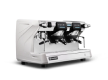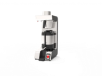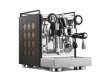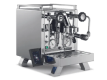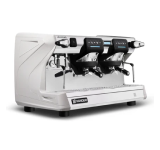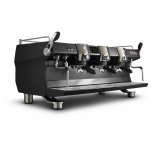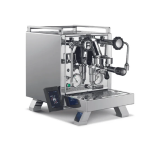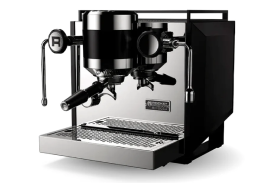
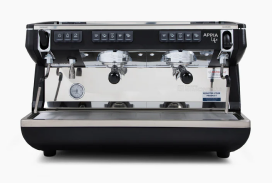
Gravimetric Espresso Machines

A gravimetric espresso machine weighs the shot as it pours and cuts the pump the moment it hits your number. No stopwatch, no eyeballing the stream, no drift when the beans settle or the grind moves overnight. That is what separates it from a volumetric machine, which measures the water going in rather than the espresso coming out, and from a manual one, where the call is the barista's. Weight is the only one of the three that tracks what actually lands in the cup. Every barista on the roster then pulls the same shot, which is the whole point.

How Is a Gravimetric Espresso Machine Different From Volumetric or Manual Dosing?

The difference is what each machine watches. A gravimetric machine uses a load cell under the drip tray or group to weigh what actually lands in the cup, and cuts the pump the instant it hits your gram target. A volumetric machine counts water through a flowmeter on the way in, which is fast and repeatable once dialled in, but it cannot tell a clean shot from a channelling one. A manual machine watches nothing at all: the barista calls it by eye or by stopwatch, which is the most variable of the three across a long shift.

That gap matters because grind, dose, puck density and basket shape all change how much espresso a given volume of water actually produces. A gram is a gram regardless. If your bar already runs dialled-in volumetric espresso machines, that remains a proven baseline for most service; gravimetric simply corrects for the result rather than the input.

In practice it runs one of two ways. Victoria Arduino's system shows live shot weight and time on a screen above the group and stops the pump at your programmed target. La Marzocco's Auto Brew Ratio goes a step further: it weighs the dose in the portafilter first, then stops once your ratio is hit, so the target moves with whatever dose actually went in.

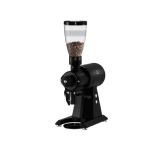
What none of this changes is everything before the pump stops. Grind, distribution and tamp are still the barista's to get right, so pair the machine with a grinder that holds a consistent particle size; our coffee grinders collection covers that side. Dosing is also not a boiler technology, which is why these sit inside the wider commercial espresso machines range: underneath is still a single boiler, a heat exchanger or a multi-boiler setup, and on a busy bar that choice matters as much as how the shot is stopped.

FAQ

Is a gravimetric espresso machine only for high-volume commercial cafes?

No, but it earns its keep fastest where volume is high, because that's where small shot-to-shot drift adds up across a shift. A lower-volume bar or a single-group setup still benefits from the consistency, it just pays back more slowly than on a machine pulling hundreds of shots a day.

Does the machine account for different cup weights?

Yes. It tares whatever is sitting on the tray before the shot starts, so a heavy ceramic demitasse and a thin glass both stop at the same weight of espresso. Systems that weigh in the portafilter instead tare at the dose. Worth checking your tallest cup still clears the group, since a travel mug can foul the sensor.

Does stopping by weight slow the bar down during a rush?

Usually the opposite. The pump cuts itself, so a barista can start the shot and turn straight to milk instead of standing over the group with a timer. What it will not do is make the extraction itself any quicker. The time you get back is the attention, not the seconds.

Does a gravimetric machine mean I don't need to dial in my grinder anymore?

No, but it changes what the grinder tells you. With the weight fixed, shot time becomes your drift signal: if the same target weight suddenly takes ten seconds longer to reach, the grind has moved. You still dial in every morning, you just get a much clearer reading of when something has changed.

What's the difference between a gravimetric grinder and a gravimetric espresso machine?

They solve different halves of the same problem. A gravimetric grinder weighs the dose going into the portafilter and stops grinding at a target input weight. A gravimetric espresso machine weighs the shot coming out of the group and stops the pump at a target output weight. Running both together closes the loop on both ends of the shot.

Does the built-in scale need regular calibration?

An integrated load cell under the group is a fixed, permanently mounted sensor rather than a portable scale that gets bumped or moved, so it holds calibration far more reliably day to day. It should still be checked as part of routine machine service rather than assumed accurate forever, especially if shot weights start drifting without a recipe change.

Is this the same thing as a home coffee maker with a built-in scale?

No. Home drip coffee makers with scales are measuring brew water for a completely different process. A gravimetric espresso machine is a commercial or prosumer semi-automatic espresso machine that weighs a pressurized espresso shot in real time and stops extraction at a target weight, a different mechanism built for a different drink.

Is a semi automatic espresso machine the same as a gravimetric one?

Not quite; gravimetric is a specialization within the semi-automatic category, not a synonym for it. Every gravimetric machine is semi-automatic, since the barista still doses, distributes, and starts the shot, but plenty of semi-automatic machines run on volumetric or fully manual dosing instead of a built-in scale.