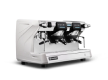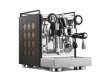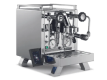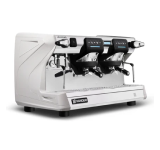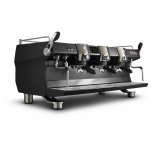
Budget Commercial Espresso Machines

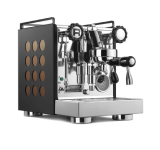
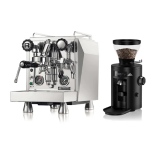
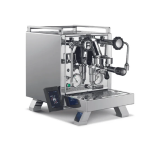
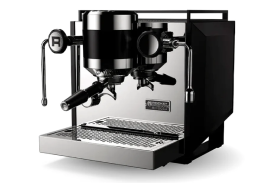
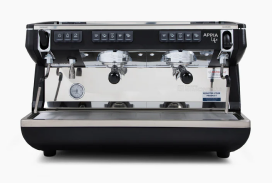
Hunting for the cheapest commercial espresso machine turns up two very different things: real commercial gear at the affordable end, and a budget espresso machine built for a home kitchen. This page is only the first kind. What you give up down here is usually group count and creature comforts, not build quality. Expect a single group, simpler temperature control, and fewer programmable options. What you keep is the part that matters, a machine engineered to pull shots back to back through a full service without cooking itself. Know which corners are safe to cut and the entry level stops being a gamble.

What Do You Actually Get, and Give Up, at the Bottom of the Commercial Range?

What you give up first is group count. Most machines down here are single group, good for roughly 25 to 35 drinks in a busy hour. That comfortably covers a cart or a low-volume cafe, but it becomes the bottleneck the moment two milk drinks and a double land together. If your peak hour is already past that, compare the full commercial espresso machines range before assuming one group will stretch to fit. If it is not, our 1 group commercial espresso machines cost less to run than a bigger machine you do not need.

You give up some boiler flexibility too. A single boiler shares its heat between brewing and steaming, so the two compete; a heat exchanger keeps a separate brew circuit and recovers faster between drinks. For a shop pouring mostly drip with the occasional latte, a single boiler is genuinely fine. For a bar steaming and pulling back to back all morning, you will feel the limit inside a fortnight.

What you should never give up is certification. NSF or ETL is what tells a health inspector the machine was built and tested for commercial food service rather than home use, and skipping it can mean a slow inspection or a failed one, depending on your local board of health. If you are not sure what your jurisdiction asks for, our team will check it with you before you buy.

The thing that catches people out is not the machine at all, it is the install: where the water comes from, and what circuit the machine lands on. Both are far easier to settle before delivery than after, and the questions below cover what to check. And if your real volume looks more like a breakroom than a cafe counter, our office coffee machines collection is the better fit.

FAQ

What actually fails first if I run a home machine in a cafe?

The boiler and the pump, usually within months. A home machine is built to recover between drinks, not to hold temperature through forty in a row, so shots start pulling cool by the middle of a rush and the duty cycle it was designed around gets exceeded every morning. It is not a lower grade of the same thing, it is a different design brief.

Why do "cheapest commercial espresso machine" search results mostly show home machines?

Because most of what ranks for that phrase is home equipment being marketed with commercial-sounding language, not machines actually built or certified for food service. A genuinely commercial machine, even the least expensive one in a real commercial lineup, is a different category of equipment, since its boiler, pump, and group head all have to survive daily service rather than weekend use.

What does plumbing one of these in actually involve?

A dedicated water line, a drain the machine can feed into, and filtration sitting between the two. Most bars run a three-inch open drain with a P-trap underneath. A reservoir machine skips all of that and gives you portability for a cart, at the cost of refilling it through service and slightly less steady pressure during a rush.

Do I need a water filter, or can I plumb straight into the mains?

Filter it. Scale from untreated water is the most common reason a commercial boiler fails early, and it builds fastest on a machine held at temperature through a full service. Most manufacturers specify a hardness range, commonly somewhere around 50 to 150 ppm, and expect treated water rather than raw mains. Test your water first, then size the filter to what it actually reads.

Can I add a second group later if the cafe grows?

No. Group count is fixed by the frame and the boiler sitting behind it, so a single group machine stays a single group machine for life. If you think you will outgrow one group inside a year or two, size for where you expect to be rather than where you are, because the alternative is buying twice.

What ongoing costs should I plan for beyond the machine?

Filter cartridges on a schedule, group gaskets and shower screens as routine wear parts, and a professional service at least once a year. A budget machine is not cheaper to maintain than a bigger one, since the same seals wear on the same schedule. What does vary is parts availability, so check a model is properly supported before you commit to it.

Will a health inspector actually check the machine itself?

Usually they check the certification mark and how the machine is plumbed rather than testing the machine. What tends to hold up an inspection is a missing NSF or ETL mark, or a drain connection that is not air-gapped the way local code wants it. Both are worth confirming with your health department before install day rather than on it.

How long does a commercial espresso machine last with regular servicing?

With regular maintenance, a commercial machine, including budget-tier models, typically runs for years of daily service rather than months, since the core components are built for continuous use in the first place. Parts availability and service access matter as much as the machine itself, so our team, based out of our Austin, TX warehouse, can walk you through service expectations for any specific model before you buy.