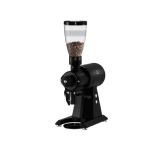
Compak Coffee Grinders

Compak grinders are built in Barcelona and tend to be chosen by people who have already run something noisier. The range covers on-demand espresso grinding for a working bar up to larger machines for a shop grinding retail bags as well as shots. What separates them is burr size and how much of the dosing the machine handles for you.

Which Compak Grinder Suits the Way You Work?

Burr diameter is the first decision and it is about pace, not quality. A smaller burr set is enough for a counter that serves steadily, takes less room and costs less to re-burr. Larger burrs cut the same dose in fewer passes, so they are faster and run cooler through a long service. The number to size against is your busiest twenty minutes, because that is when a slow grinder turns into a queue.

The second is what the grinder is grinding for. Espresso is a fine, narrow particle band and most of this range is built for it. If you also grind retail bags for customers, or brew filter alongside espresso, that is a genuinely different job: a grinder set up for espresso will do it badly and will need re-dialling every time you switch back. Two machines is the honest answer where both matter.

Third is dosing. On-demand grinding delivers fresh into the portafilter for each drink so nothing sits going stale, and beyond that the question is whether the machine stops on a timer or on a weight. Time is proven and simple. Weight removes the drift you get as the hopper empties and the beans press less hard on the burrs, which is what you want when several people work the same machine and nobody weighs every shot.

Then the practical fit, which is where grinder decisions actually go wrong. Measure the clearance under the outlet for your portafilter and any scale beneath it, and check the grinder sits in the path a barista already walks rather than across the bar. Our commercial coffee grinders range shows how Compak sits against other brands at the same volume, and our commercial espresso machines collection covers the machine you are pairing it with.

FAQ

Are Compak grinders quiet enough for a small cafe?

Quieter than many commercial grinders, which is a real consideration in a compact room where the grinder sits near seated customers. Noise still scales with burr size and speed, so a large grinder in a small space will be heard. Placement and a solid worktop underneath do more than the specification does.

What is stepless adjustment and does it matter?

Stepless means the grind adjusts continuously rather than clicking between fixed positions, so you can land between two settings instead of choosing the closest one. On espresso that fine control genuinely matters, because the useful range between sour and bitter is narrow. On coarser brewing it matters much less.

Can I grind retail bags on the same machine I use for espresso?

You can, but you will re-dial every time you switch, and espresso burrs handle coarse grinding poorly. A shop selling beans as well as drinks is usually better off with a second grinder set for brewing. It also stops a customer's bag of filter grind holding up the espresso queue.

How long do the burrs last?

Longer than most people assume, and the signal is drift rather than a breakdown. When the same setting starts taking longer to deliver the same dose, or shots run fast against your recipe, the edges have gone. Uniformity degrades before speed does, so shot inconsistency across a shift is the first thing anyone actually notices.

Does a commercial grinder need certification?

Most health departments expect NSF or ETL on commercial food service equipment, since it shows the machine was built and tested for that use rather than for home. Requirements vary by city and county, so confirm what applies where you are before ordering rather than assuming a mark is universal.

How much does the grinder matter compared with the espresso machine?

More than most buyers expect. A machine holding temperature to a fraction of a degree will still pour an uneven shot if the grind is drifting, and grind moves with humidity, bean age and hopper level in a way boiler temperature does not. Give the grinder a real share of the budget rather than the remainder.

What daily maintenance does it need?

Brush out the chamber and wipe down the hopper every day, because coffee oils build up fast and go rancid where nobody looks. Beyond that it is a full burr clean on a schedule and a burr change when your dose time says so. Far less work than the espresso machine, which is why it gets forgotten.

Should I buy a grinder with a built-in scale?

If more than one person works the bar, usually yes. A built-in scale removes the dose drift that grind-by-time cannot fix on its own, and it stops consistency depending on whoever is on shift. A single well-drilled operator running one recipe may genuinely not need it, and the money is better spent elsewhere.