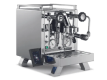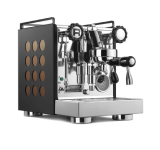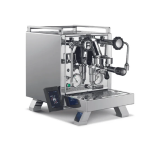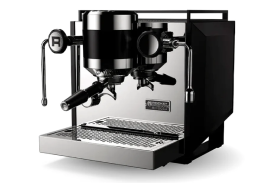
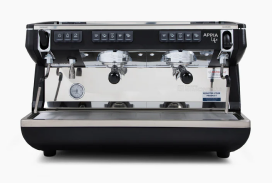
Single Boiler Espresso Machines

A single boiler espresso machine heats one tank of water and uses it for both jobs, so you pull your shot, flip to steam, wait for the boiler to climb, then texture your milk. That wait is the entire trade-off, and for a lot of people it is a non-issue: if you make one or two drinks at a time, the machine is ready again before you are. Where it stops working is a queue, and knowing which of those describes your morning is the whole decision.

Is One Boiler Enough for the Way You Make Coffee?

Count how many milk drinks you make in a row. One or two, with a minute in between to grind and knock out the old puck, and the temperature swing is absorbed by the routine. Four in a row for guests, and you will spend the morning waiting on a boiler, because it has to climb to steam temperature and then come back down before it can brew properly again. That is not a fault; it is what one tank of water can physically do.

The second thing to look at is temperature control, and it is where the real quality gap sits inside this category. A basic thermostat lets the boiler swing around a set point, so consecutive shots land at genuinely different temperatures. A PID holds it much closer, which is what makes a recipe repeatable. If you are drinking light or medium-light roasts, where the window between sour and sweet is narrow, PID is the upgrade worth paying for long before a second boiler is.

Third is what a single boiler frees up. It is smaller, lighter, uses less power, warms up faster and costs less to run and to service. On a kitchen counter with limited space and a single socket, those are not consolation prizes, they are the reason the format persists. It also means your money can go into the grinder instead, which will do more for your shots than the machine will.

Be honest about outgrowing it, though. If you already know you want to pour milk for a household rather than a person, a heat exchanger or a dual boiler is the machine you actually want, and buying the smaller one first usually means buying twice. Our prosumer espresso machines range covers the step up, heat exchanger machines let you brew and steam together from one boiler, and our dual boiler espresso machines collection separates the two properly.

FAQ

How long do I actually wait between brewing and steaming?

Long enough to notice, not long enough to ruin your morning: the boiler has to climb from brew temperature to steam temperature, and then come back down before the next shot. On a single drink it disappears into grinding and cleaning the portafilter. On the third flat white in a row it is the thing you are standing there waiting for.

Is a PID worth it on a single boiler?

It is the best money you can spend inside this category. A PID holds the boiler close to your set point instead of letting a thermostat swing around it, so consecutive shots repeat. That matters most on lighter roasts, where a couple of degrees moves the cup noticeably, and it costs far less than stepping up to a second boiler.

Can I make a decent cappuccino on a single boiler?

Yes, one at a time. There is nothing about a single boiler that prevents good milk texture; the limitation is sequence, not quality. Where it struggles is volume, so a machine like this suits someone making a drink for themselves rather than someone serving four people breakfast.

Should I buy a single boiler or save for a dual boiler?

Ask what you will actually be making in a year. If it is one or two drinks a day, the single boiler is the right machine and the money left over belongs in your grinder. If you already know you will be steaming for a household most mornings, buying the smaller machine first usually means buying twice.

Does the grinder matter more than the machine?

At this end of the market, yes. A single boiler machine with a good grinder in front of it makes better espresso than an expensive machine fed by a poor one, because grind consistency is what decides whether the shot extracts evenly at all. If the budget only stretches to one good purchase, make it the grinder.

How long does it take to warm up?

Less than a bigger machine, which is one of the genuine advantages. There is less water and less metal to heat, so a single boiler is usable sooner from cold. Machines built around a heavy brass group are the exception, since the group itself needs time to saturate even once the boiler is at temperature.

Can I plumb a single boiler machine in?

Some models can be, some are tank-only, so check before you assume. For most home use the tank is the point: it lets the machine sit anywhere there is a socket. If the machine is staying put and you want to stop refilling, plumbing in is worth considering, and filtration should be specified at the same time.

What maintenance does one need?

Backflush regularly where the machine supports it, replace the group gasket and shower screen when they harden, and descale on a schedule set by your water rather than the calendar. Scale is what ends most boilers early, and a single boiler machine is no more forgiving of hard water than a bigger one.