Eureka Commercial Coffee Grinders

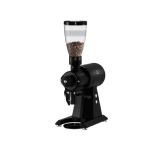
A Eureka coffee grinder in this collection is a commercial Atom, the on-demand espresso grinder built for a working bar. Every one of them runs Eureka's Diamond Inside burrs. What separates them is burr size, which sets your grinding speed, and whether the grinder weighs each dose itself or leaves that to the barista. Get those two calls right and the rest is setup.

Which Eureka Atom Fits Your Bar, and Is Grind by Weight Worth It?

Start with burr size, because it decides pace. The 65mm models put a standard double in the basket quickly enough for most independent bars. The 75mm models grind noticeably faster, in the region of five grams a second, which is the difference between the grinder keeping up with two baristas and quietly holding them up. If your peak hour is steady rather than brutal, the 65 is the honest pick and the money saved is better spent elsewhere.

The second decision is the one buyers agonise over: Atom Excellence or Atom W. The Excellence models are grind by time, which is the format most commercial bars have always run. You set a duration, the grinder throws that dose, and your barista checks it on a scale. It is proven, it is simple, and there is nothing wrong with it.

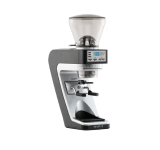
The Atom W adds an integrated scale and a touchscreen, so the grinder weighs the dose as it falls and stops at your target rather than at a time. It is accurate to a tenth of a gram, and it removes the one variable grind-by-time cannot fix on its own: a full hopper presses harder than an empty one, so the same setting drifts across a service. If your bar runs a rotating team, or you are chasing shot-to-shot consistency you can actually measure, that is what you are buying. A small, well-drilled team on one recipe may genuinely not need it.

Everything here shares the same Diamond Inside burr set, which is what stops both decisions above being quietly undone six months later. Burrs that hold their edge hold your recipe with them. If you want to compare these against other brands at the same volume, our commercial coffee grinders range is the place to do it, and our Eureka accessories collection covers hoppers and spares. Shopping for a kitchen rather than a bar? Our Eureka home favorites collection is the better fit.

FAQ

What are Diamond Inside burrs, and do they actually last longer?

They are Eureka's burrs treated through a cryogenic process that hardens the steel's crystal structure, so the cutting edges stay sharp through a much higher volume of coffee than untreated burrs. The practical benefit is stability rather than speed: your grind setting drifts less slowly over months, so you re-dial less often.

How do I know when a grinder's burrs need replacing?

Watch your dose time, not the calendar. When the same setting starts taking longer to throw the same weight, and shots begin running faster than your recipe, the burrs have dulled. Uniformity goes before speed does, so a widening spread of grind size and inconsistent extractions are usually the first thing a barista notices.

Is a 75mm grinder overkill for a single group machine?

Often, yes. A single group bar rarely asks for five grams a second, and the extra burr diameter mainly buys throughput you will not use. Where it still earns its place is a bar that grinds for both espresso and a second outlet, or one where the grinder is shared across two machines during a rush.

Does the grinder need to sit next to the espresso machine?

Next to it, and in the path the portafilter already travels, so nobody crosses the bar mid-drink. It sounds like a small thing and it is the single most common cause of a slow bar. Measure the height clearance under the outlet too, since a tall portafilter or a scale underneath changes the geometry.

Can I use one of these for filter coffee as well as espresso?

Not well. These are espresso grinders and their burrs are cut for the fine, narrow particle range espresso needs, so running one coarse for filter gives a wider spread than a dedicated brew grinder produces. The SG85 in this collection is the exception, built around batch brew dosing rather than espresso.

What is the real difference between an on-demand grinder and a doser?

On-demand grinds fresh for each drink and delivers straight to the portafilter, so nothing sits in a chamber going stale. A doser holds ground coffee in a compartment and portions it out with a lever, which was standard for decades and still suits very high volume. Everything in this collection is on-demand.

How much noise does a commercial grinder make?

More than most first-time buyers expect, and it matters in a small room. Larger burrs at higher speed are the loudest part of a bar's morning, which is worth thinking about in a compact cafe, an office, or anywhere the grinder sits close to seated customers. Placement and a solid worktop under it do more than any spec sheet.

Do these grinders need a water filter or any plumbing?

No, a grinder needs neither. It is worth saying because buyers often plan the grinder and the machine as one install: the espresso machine needs a water line, a drain and filtration sized to it, while the grinder needs only a suitable electrical circuit and the counter space. Plan the two separately.