SHOP BY machine TYPE
SHOP BY boiler type
Favorites
Your wishlist is empty.
Summer Sale up to 30% off -
Shop Commercial |
Shop Home
Text us for deals!
(512) 273-6324
Get Monthly Offers & Discounts - 5% off Now
Sign Me Up
SHOP BY machine TYPE
SHOP BY boiler type
Espresso machines
SHOP BY machine TYPE
SHOP BY boiler type
Renewed Machines
Accessories
Best Bundles
Fast Shipping
Espresso machines
Accessories
Best Bundles
Fast Shipping
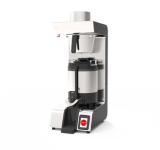
A Fetco coffee brewer makes coffee by the gallon and holds it, which is a different job from an espresso machine and a different kind of venue. Offices, diners, breakfast service, catering and convenience counters all need coffee poured on demand rather than built to order. Fetco covers the brewing and the holding, so one supplier handles both halves.
Two numbers decide almost everything: how much coffee you go through at peak, and how many places you need to pour it from. Fetco's brewers come in one gallon and one and a half gallon batch sizes, in single-station and twin-station formats. A single station brews into one dispenser at a time. A twin station has two brew heads, so a second batch is going while the first is being served, which is what a breakfast rush or a busy office floor actually needs.
The series matters less than buyers expect but is worth understanding. The Plus Series covers the core batch brewing with straightforward controls. The NG Series adds more programmability over the brew itself, which is worth having if you care about matching a recipe rather than simply making hot coffee. There is also an airpot format for venues that want to brew straight into a portable server, and a multi-beverage brewer for sites pouring tea alongside coffee.
The dispenser is the half people underestimate. Coffee sitting on a hot plate is coffee going bitter, which is why Fetco's Luxus range is thermal: it holds brewed coffee at temperature without continuing to cook it. Within that range you can choose a satellite server that moves to where the customers are, a sight-gauge model so staff can see the level without lifting it, or a hands-free version for a self-service counter where hygiene and speed matter.
The range does not stop at hot coffee, which is useful to know if you are equipping a whole site rather than filling one gap. There are iced tea dispensers, a cold brew maker, and a nitro tap system for venues adding cold coffee to the menu. What Fetco does not make is espresso equipment, so a venue running an espresso bar alongside batch coffee needs both. Our commercial brewers range shows Fetco against other brands, and our espresso machine parts collection covers baskets, filters and spares.
No. Fetco builds batch brewing and dispensing equipment, which is a genuinely different product category from an espresso machine. If you need both, and plenty of venues do, you are buying two pieces of equipment from two ranges. Buyers who arrive here expecting espresso are usually looking for a different collection entirely.
More than the brewer's own footprint, because the dispenser sits beside or beneath it and both need access. Allow clearance above for the brew basket to come out, and room for a second server if you are swapping them through a rush. Measure the depth as well as the width, since these are deeper than a domestic machine.
Long enough to matter, and far longer than on a hot plate, because a thermal dispenser insulates rather than continuing to apply heat. Coffee held over direct heat keeps cooking and turns bitter within a short window. Even so, treat holding time as a service standard you set and enforce, rather than something the equipment solves on its own.
They take a filter sized to the brew basket rather than a universal one, so check the size against the model before you order a case. It is a small thing that stops service when it is wrong, which is why most sites keep a spare box on the shelf rather than discovering the sizing on a Monday morning.
Most commercial batch brewers are built to plumb into a water line, since refilling a reservoir through a service is not realistic at this volume. Plan a water line and filtration before delivery. Some smaller formats can run on a pour-over fill, which suits a site with no plumbing nearby, so confirm the format before you commit to a layout.
Yes, and arguably more, since brewed coffee is over ninety-eight percent water and nothing masks it. Filtration protects the machine from scale and protects the taste at the same time. Test your supply first, then size filtration to the brewer's actual flow rate rather than fitting whatever cartridge is to hand.
That is exactly what a satellite dispenser is for. The brewer stays in the back, and the served coffee moves to where the customers are, whether that is a breakfast buffet, a second floor or a catering table. It is usually cheaper and simpler than a second brewer, provided someone is available to move and swap the servers.
Daily cleaning of the brew basket and spray head, regular descaling on a schedule set by your water, and periodic checks of the seals and valves. It is far less involved than an espresso machine, which is precisely why it gets neglected until the coffee starts tasting flat and nobody can say when it changed.
A Fetco coffee brewer makes coffee by the gallon and holds it, which is a different job from an espresso machine and a different kind of venue. Offices, diners, breakfast service, catering and convenience counters all need coffee poured on demand rather than built to order. Fetco covers the brewing and the holding, so one supplier handles both halves.
Two numbers decide almost everything: how much coffee you go through at peak, and how many places you need to pour it from. Fetco's brewers come in one gallon and one and a half gallon batch sizes, in single-station and twin-station formats. A single station brews into one dispenser at a time. A twin station has two brew heads, so a second batch is going while the first is being served, which is what a breakfast rush or a busy office floor actually needs.
The series matters less than buyers expect but is worth understanding. The Plus Series covers the core batch brewing with straightforward controls. The NG Series adds more programmability over the brew itself, which is worth having if you care about matching a recipe rather than simply making hot coffee. There is also an airpot format for venues that want to brew straight into a portable server, and a multi-beverage brewer for sites pouring tea alongside coffee.
The dispenser is the half people underestimate. Coffee sitting on a hot plate is coffee going bitter, which is why Fetco's Luxus range is thermal: it holds brewed coffee at temperature without continuing to cook it. Within that range you can choose a satellite server that moves to where the customers are, a sight-gauge model so staff can see the level without lifting it, or a hands-free version for a self-service counter where hygiene and speed matter.
The range does not stop at hot coffee, which is useful to know if you are equipping a whole site rather than filling one gap. There are iced tea dispensers, a cold brew maker, and a nitro tap system for venues adding cold coffee to the menu. What Fetco does not make is espresso equipment, so a venue running an espresso bar alongside batch coffee needs both. Our commercial brewers range shows Fetco against other brands, and our espresso machine parts collection covers baskets, filters and spares.
No. Fetco builds batch brewing and dispensing equipment, which is a genuinely different product category from an espresso machine. If you need both, and plenty of venues do, you are buying two pieces of equipment from two ranges. Buyers who arrive here expecting espresso are usually looking for a different collection entirely.
More than the brewer's own footprint, because the dispenser sits beside or beneath it and both need access. Allow clearance above for the brew basket to come out, and room for a second server if you are swapping them through a rush. Measure the depth as well as the width, since these are deeper than a domestic machine.
Long enough to matter, and far longer than on a hot plate, because a thermal dispenser insulates rather than continuing to apply heat. Coffee held over direct heat keeps cooking and turns bitter within a short window. Even so, treat holding time as a service standard you set and enforce, rather than something the equipment solves on its own.
They take a filter sized to the brew basket rather than a universal one, so check the size against the model before you order a case. It is a small thing that stops service when it is wrong, which is why most sites keep a spare box on the shelf rather than discovering the sizing on a Monday morning.
Most commercial batch brewers are built to plumb into a water line, since refilling a reservoir through a service is not realistic at this volume. Plan a water line and filtration before delivery. Some smaller formats can run on a pour-over fill, which suits a site with no plumbing nearby, so confirm the format before you commit to a layout.
Yes, and arguably more, since brewed coffee is over ninety-eight percent water and nothing masks it. Filtration protects the machine from scale and protects the taste at the same time. Test your supply first, then size filtration to the brewer's actual flow rate rather than fitting whatever cartridge is to hand.
That is exactly what a satellite dispenser is for. The brewer stays in the back, and the served coffee moves to where the customers are, whether that is a breakfast buffet, a second floor or a catering table. It is usually cheaper and simpler than a second brewer, provided someone is available to move and swap the servers.
Daily cleaning of the brew basket and spray head, regular descaling on a schedule set by your water, and periodic checks of the seals and valves. It is far less involved than an espresso machine, which is precisely why it gets neglected until the coffee starts tasting flat and nobody can say when it changed.
Sign up and get 5% off first order
Sign up for our newsletter to keep up with new products, events and 5% off your first order!