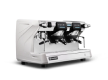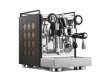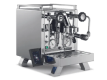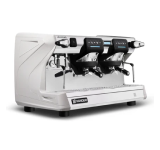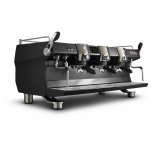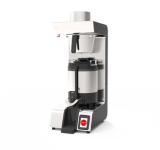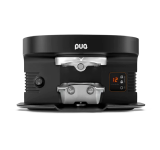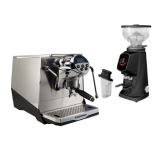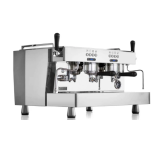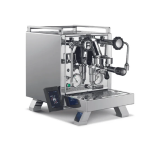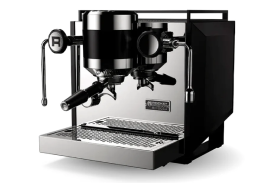
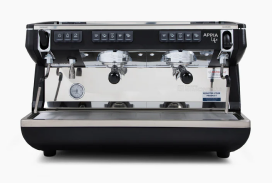
Heat Exchanger Espresso Machines (HX)

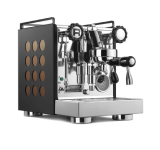
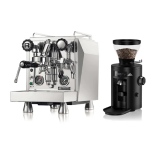
A heat exchanger espresso machine lets you pull a shot and steam milk at the same time, from a single boiler. Inside, an espresso heat exchanger runs fresh brew water through a tube passing into the steam boiler, heating it on its way to the group, so neither job waits for the other. A single boiler machine makes you choose between the two and wait in between. A dual boiler runs separate boilers and holds brew temperature dead steady, for more money and more counter space. HX sits between them, and for most prosumer setups pulling a few drinks at a time, that is the sweet spot.

How Does a Heat Exchanger Espresso Machine Compare to Single Boiler and Dual Boiler Machines?

Every espresso machine comes down to how it manages heat, and there are three routes to it. A single boiler espresso machine heats one tank for both jobs, so you switch modes and wait for it to swing to the right temperature each time. A heat exchanger holds that same boiler at steam temperature and threads a slim tube of fresh water through it, so brew water heats on demand on its way to the group, borrowing heat rather than storing a tank of it. A dual boiler espresso machine skips the borrowing and runs two boilers with their own controls, which is why it holds the tightest brew temperature of the three.

What you pay for that borrowed heat is one extra step. Water resting in the exchanger sits well above brew temperature once the machine has been idle a few minutes, so an HX needs a cooling flush before the portafilter goes in. It takes seconds rather than minutes, but it is a real difference from a dual boiler, where you simply lock in and pull.

What you get back is brewing and steaming at the same time out of a single boiler, which is the whole reason the design exists. A single boiler makes you choose between the two and wait in between. An HX lets the shot run while the wand is working, and for a home kitchen or a cafe pulling shots in bursts rather than nonstop, that is usually the right stopping point inside the prosumer espresso machine category.

So the choice is volume, not budget. If your bar runs flat out and a few seconds of flush actually costs you covers, the dual boiler is the better fit. If it does not, an HX gets you the same simultaneous work without paying for a second boiler you will not run all day. And if you want more built-in stability than an entry machine gives without making the full jump, mid tier heat exchanger machines add PID control and larger boilers on the same core design.

FAQ

What is a cooling flush on an HX espresso machine, and why does it need one?

A cooling flush is running a few seconds of water through the group head and down the drain before you lock in the portafilter. It matters because the water sitting inside an HX machine's heat exchanger runs hotter than proper brew temperature whenever the machine has sat idle, so flushing purges that overheated water and lets fresh water settle back down before it hits your puck.

Why does water spit or hiss steam on the first pull after the machine sits idle?

That's superheated water inside the heat exchanger venting as it escapes, and it's normal, not a fault. It's exactly what the cooling flush is meant to clear. Run the group until the spitting stops and the stream settles into a steady, even flow before you lock in the portafilter and pull.

Do I need to flush the machine before every shot, even back to back?

No, the flush is about idle time, not every shot. Once the group and heat exchanger are already up to temperature from a recent pull, back-to-back shots don't need a fresh flush. It's coming back from a few idle minutes, not the drink before it, that calls for one.

How long does a heat exchanger espresso machine take to warm up?

Give an HX machine with an E61 group around 20 to 30 minutes from a cold start, longer than a basic single boiler needs. Most of that time goes into saturating the brass group head itself, since the group, not just the boiler, is what actually sets your brew temperature at the puck.

What is an E61 group head, and why do so many heat exchanger machines use one?

The E61 is a brass group design that uses a thermosiphon, a slow natural circulation of hot water, to keep the brewing side warm and stable between shots instead of relying on the boiler alone. It's become the standard group on HX machines because that thermal mass and circulation help even out the temperature swings an HX design is naturally prone to.

Does an HX espresso machine need a PID?

No, plenty of HX machines run well on a standard thermostat-based control. A PID adds tighter, more linear control over the boiler temperature and can shorten how aggressive your cooling flush needs to be, so it's a genuine upgrade, just not one you need to get good shots out of an HX machine.

What water should I run through an HX machine?

Filtered, and it matters more here than on a single boiler. An HX boiler sits at steam temperature all day, which is exactly the condition scale forms in fastest, and that scale settles on the heat exchanger tube your brew water passes through. Test your water, then fit a filter that brings hardness into the range your manufacturer specifies.

Is a heat exchanger machine good for a low-volume cafe, or is it overkill for home use?

It works for both. HX machines scale from compact single-group units built for a home kitchen up to two-group models sized for a small cafe bar, which is why the category spans most of the prosumer tier. The deciding factor is less about home versus cafe and more about how many drinks you're pulling back to back.