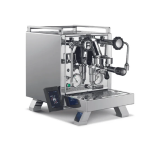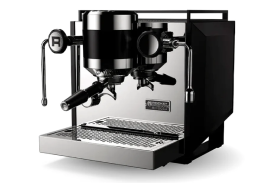
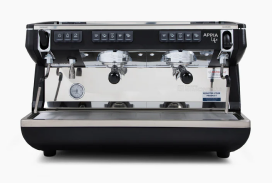
La Marzocco Espresso Machines for Cafes and Home Counters

A La Marzocco espresso machine holds temperature when the bar is slammed, which is the unglamorous reason so many cafes standardise on them. Saturated groups and a boiler per group mean the fiftieth shot of the morning tastes like the fifth. The same engineering carries into the home machines, so a La Marzocco on your kitchen counter is not a diluted version of the cafe one.

Which La Marzocco Fits Your Cafe or Your Counter?

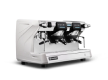
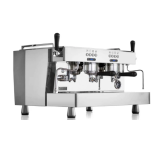
The commercial range starts with the Linea Classic, the brand's proven workhorse, and climbs through the Linea PB and Strada to the KB90 and GB5, all built on independent boilers per group and saturated group heads. Because each group draws off its own boiler, a barista steaming a pitcher on one side of the machine does not pull the brew temperature off target on the other, which is the plain reason these machines hold up through a real rush.

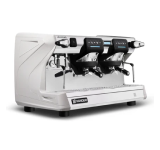
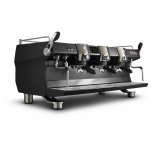
Group count is the practical call for most cafe buyers. A 2 group comfortably covers a shop doing roughly 40 to 80 drinks in its busiest hour, while a 3 group is built for drive-thrus, hotel lobbies and high-traffic urban sites that regularly clear 80 or more in that same window. Our 2 group commercial espresso machines and 3 group commercial espresso machines collections let you compare La Marzocco at the same group count, and the wider commercial espresso machines range covers every configuration if you are still narrowing down.

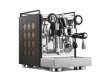
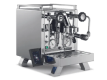
On the home side, the Linea Mini and GS3 are not scaled-down imitations. They use the same saturated group and dual-boiler architecture shrunk to a single group and a kitchen-counter footprint, which is why both pull espresso genuinely close to what comes off a Linea Classic on a cafe bar. Which of the two suits you comes down to how much of the shot you want to control by hand.

The honest way to choose a side is duty cycle, not budget. If you are pulling shots for paying customers back to back for hours, a commercial Linea, Strada or KB90 is built for that in a way no home machine is designed to survive. If you are making a handful of drinks a day for yourself, the Linea Mini or GS3 gets you the same shot quality without paying for group count you will never use. Free shipping applies to qualifying commercial orders, and current deals across La Marzocco and other brands are tracked on our coffee machine deals page.

FAQ

Is a La Marzocco Linea Mini or GS3 actually worth it for home use?

For most home setups, yes, if you plan to keep the machine for years rather than upgrade every few seasons. These machines are built to run daily for a decade or more without major component failures, and side-by-side against a well-tuned mid-range double boiler, the gap in the cup is smaller than the price difference between them suggests. You're paying for build quality and longevity, not a better-tasting shot.

What's the actual difference between the Linea Mini and the GS3?

Footprint and interface, mostly. The Linea Mini runs a simpler, fully manual layout in a smaller single-group body, while the GS3 comes as an auto-volumetric version with programmable shot buttons or a mechanical-paddle version for hands-on flow control. Both share the same saturated group and dual-boiler core, so neither makes objectively better espresso. A free consultation with our team can help settle which interface fits how you pull shots.

Do La Marzocco machines need to be plumbed into a water line?

Not necessarily. La Marzocco sells a direct-connect kit for the Linea Mini, GS3, and Linea Micra that adds an internal reservoir and drain setup, so a permanent water line is optional rather than required on the home machines. Commercial Linea, Strada, KB90, and GB5 machines are built to be plumbed in as standard, since that's the realistic setup for a cafe running all day.

What water does a La Marzocco need, and does it affect the warranty?

La Marzocco publishes a water specification and expects the machine to be run inside it, so filtration is not optional on either the commercial or home machines. Scale damage traced to untreated water is a common reason a claim gets questioned. Have your supply tested, then match a filter or softener to the reading rather than fitting a generic cartridge and hoping.

What's a saturated group head, and why does it matter?

A saturated group head sits directly in or against the boiler, so the metal the portafilter locks into is already at boiler temperature rather than being warmed passively through a thermosiphon loop like an E61 group. That means less temperature drift shot after shot, especially during a rush, which is the core reason La Marzocco's saturated-group machines hold consistency better than passively heated designs.

How often does a La Marzocco machine need professional servicing?

La Marzocco's own guidance is an annual professional service, where a technician replaces the group seal, shower screen, and steam wand components and rebuilds the expansion valve, plus a detergent backflush roughly every 4 to 6 weeks as routine in-house cleaning. Busier cafes on the commercial line typically service closer to quarterly, given the duty cycle.

Why do La Marzocco machines cost more than most other brands?

You're paying for duty-cycle durability and a global parts and service network more than any single feature list. With regular maintenance and annual service, a commercial machine reliably runs a high-volume cafe for 10 to 20-plus years, which is the math that matters when a business is buying equipment rather than an appliance. Financing is available for qualifying commercial purchases if spreading that cost works better for your cash flow.

Does PCG sell used or renewed La Marzocco machines?

That's handled on a separate part of the site rather than this collection, since it's a genuinely different buying decision from a new machine and the two shouldn't be mixed together on one page. See renewed and used equipment if that's the route you're weighing instead.