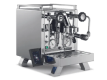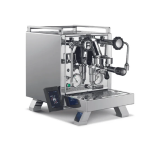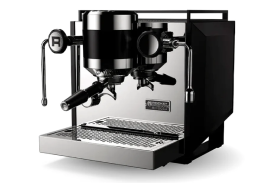
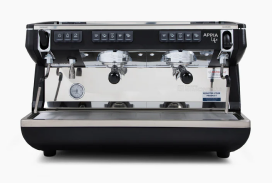
Manual Lever Espresso Machines

A manual lever espresso machine takes the pump out of the equation and puts the pressure in your hands. You pull the lever, a spring or your own arm drives water through the puck, and you feel the shot happen rather than watching a gauge report it. That is the appeal and the catch in the same sentence: a manual espresso machine rewards attention and punishes autopilot, which is exactly why the people who love them will not go back. What varies across the range is how the pressure is generated, and how much of it comes from your arm.

What Is a Lever Machine Actually Like to Live With?

Start with what the lever does. On a spring lever, pulling the handle compresses a spring which then drives the water through at a pressure that naturally tapers as it releases. On a direct lever, your arm is the pump for the whole shot. Either way the pre-infusion happens because you let it, not because a programme decided, and the pressure curve is yours rather than the manufacturer's. That declining curve is why lever shots are often described as sweeter and less harsh at the end.

What that costs is repeatability, and it is worth being straight about. Two people pulling the same coffee on the same machine will get two different shots until they have both put the practice in. A volumetric machine removes that variation deliberately, which is the right call on a bar with a rotating team. A lever hands it back to you, which is the right call if the making is part of why you are here.

The physical side matters too. Levers are heavy, they want a solid worktop, and group height is often greater than a pump machine, so measure the space under your cabinets before falling for one. Commercial lever groups in particular are built around a boiler running at steam pressure, so warm-up is long and most owners run a timer rather than switching on and waiting.

There is a middle ground that catches a lot of buyers by surprise: much of what people call manual is really a paddle or pre-infusion control on a pump machine, which gives you some of the feel with none of the arm work. If that is closer to what you want, our prosumer espresso machines range covers it, and our commercial espresso machines collection covers lever groups built for a bar rather than a kitchen.

FAQ

What is the difference between a spring lever and a direct lever?

A spring lever stores your effort: you pull the handle to compress a spring, and the spring drives the shot at a pressure that falls away naturally as it unwinds. On a direct lever your arm applies the pressure for the whole extraction, so the curve is entirely yours. Spring levers are easier to repeat, direct levers give more control.

Is a lever machine harder to learn than a pump machine?

Yes, and that is a fair thing to know going in. Grind, dose and tamp still have to be right, and on top of that you are learning a physical action that takes practice before it repeats. Most people describe a few weeks of inconsistent shots before it clicks. If that sounds like a chore rather than a pleasure, buy a pump machine.

Do lever machines make better espresso?

They make different espresso, and whether that is better is a matter of taste. The declining pressure curve tends to give a sweeter, softer finish that a lot of drinkers prefer, particularly on darker and medium roasts. What a lever will not do is rescue a bad grind or stale coffee. It is a different instrument, not a shortcut.

How much force does pulling a shot actually take?

Less than people fear on a spring lever, since you are compressing a spring once rather than fighting the whole extraction. More on a direct lever, where you are sustaining pressure through the pull. Neither is heavy work for most adults, but both are repeated movements, which is worth thinking about if you have wrist or shoulder trouble.

Can I use a lever machine for milk drinks?

Yes, if it has a steam boiler capable of it, and commercial lever groups generally do. What varies is recovery between steaming and brewing, in the same way it does on any machine. Check the boiler arrangement rather than assuming, since a machine designed around espresso alone may steam slowly.

How long do they take to warm up?

Longer than most pump machines, because there is usually a substantial brass group and a boiler at steam pressure to bring up. Give one a proper warm-up rather than a few minutes, and use a timer if you drink coffee on a schedule. Pulling on a group that has not saturated gives you a cold, sour shot and no clue why.

Are lever machines harder to maintain?

Different rather than harder. There is no pump or, on many, no electronics to fail, which removes some failure points entirely. What you do have are seals and a piston that need periodic attention, and a group that is heavier to work on. Parts tend to be simple and long-lived, which is why so many old levers are still running.

Will a lever fit under my kitchen cabinets?

Measure first, because this is where lever purchases most often go wrong. Levers are tall, and you need clearance not just for the machine but for the handle travelling through its full arc. That arc is the dimension people forget, and discovering it after delivery is an expensive way to learn it.