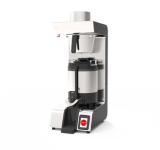
Commercial Milk Steamers

A commercial milk steamer takes the one job on a bar that depends most on technique and makes it repeatable. Instead of a barista holding a pitcher against a wand and judging texture by sound and feel, the machine steams to a set temperature and texture and stops. For a bar where milk drinks are most of the menu, that changes two things at once: the drinks stop varying by who made them, and a pair of hands comes free during the busiest part of every order.

What Does an Automatic Milk Steamer Actually Change on a Bar?

The first change is consistency, and it is the reason most bars look at these. Steaming milk well is a real skill, and it is the skill that degrades fastest under pressure and turnover. A machine that hits the same temperature and texture every time removes the gap between your best barista and your newest hire, which on a milk-heavy menu is most of what a customer notices between one visit and the next.

The second is labour, and it is easy to underestimate. Steaming occupies a barista for the whole pour, standing at the wand and watching. Hand that to a machine and the same person is pulling the next shot or working the till while the milk textures itself. On a two-person bar in a rush, that is not a marginal gain; it is a station's worth of capacity you already had.

The third is what it does not fix. An automatic steamer does not choose your milk, keep your fridge at the right temperature, or clean itself without anyone touching it. Milk quality and temperature going in still decide what comes out, and the cleaning cycle still needs somebody to actually run it every day. A machine that saves labour and then does not get cleaned is a hygiene problem rather than a saving.

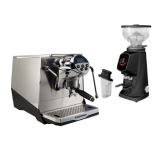
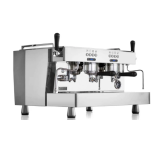
The practical questions are the usual ones. It needs somewhere on the counter within reach of the fridge and the cups, a supply arrangement that suits how you work, and cleaning designed into an opening or closing routine rather than left to memory. If you are equipping the wider bar, our commercial espresso machines range covers the machine beside it, our commercial coffee accessories collection covers pitchers and the rest of the milk kit, and for a site that wants the whole drink automated our bean to cup coffee machines collection is the better fit.

FAQ

Can an automatic steamer really match a trained barista?

It matches a good barista consistently, which is a different and often more useful thing than matching a great one occasionally. An expert can do things with texture that a machine will not, but they cannot do it identically four hundred times in a week. For most bars, the reliable average matters more to the customer than the occasional peak.

Does it work with oat and other alternative milks?

Generally yes, though alternatives behave differently under steam and not all texture as well as dairy does. Barista-formulated versions are made to foam properly and are worth the difference if alternatives are a real part of your menu. Worth checking how a specific machine handles them rather than assuming they all behave the same.

How much cleaning does one need?

A daily cycle, and it is not optional. Milk residue in a warm line is a hygiene issue rather than a taste one, so this belongs in an opening or closing routine that somebody owns by name. The machine saves labour during service and asks for a few minutes outside it, which is a good trade only if the few minutes actually happen.

Will it replace the steam wand on my espresso machine?

It usually works alongside it rather than replacing it. Most bars keep the wand for one-off drinks, small volumes and anything unusual, while the automatic steamer handles the repetitive milk work through a rush. Removing the wand entirely also removes your fallback if the steamer is down.

Is it worth it for a low-volume cafe?

Less so, and it is worth being honest about that. The payback comes from repetition: a bar pouring milk drinks continuously gets both the consistency and the labour back, while a quiet counter gets consistency alone. If your barista is not under time pressure, the money often does more in the grinder or the machine.

Where should it sit on the bar?

Within reach of the fridge and the cups, and out of the path the barista walks between grinder and group. The point of the machine is that milk texturing happens while other work continues, and that only pays if the layout lets someone start it and step away rather than standing over it anyway.

Does it need plumbing or a special power supply?

That varies by model, so confirm before designing the counter. Some need only a socket and a milk source, others want more. Either way, plan it into the bar layout at the same time as the espresso machine rather than finding a gap for it afterwards, because the useful position is rarely the leftover one.

Does the steamer or the milk matter more?

The milk, every time. Cold, fresh milk of decent quality textures well and warm or old milk does not, whatever equipment is applied to it. An automatic steamer removes variation in technique; it cannot remove variation in what you put in the jug, so fridge temperature and stock rotation still decide your ceiling.