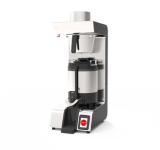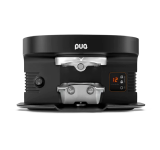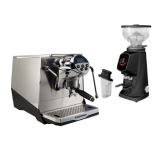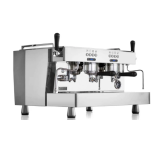
Plumbed Coffee Machines

A plumbed coffee maker draws from your water line instead of a tank you fill by hand, which sounds like a small convenience and turns out to change how the machine behaves. No refilling mid-service, steadier pressure through back-to-back drinks, and no moment where somebody discovers the reservoir is empty at the worst possible time. What it asks in return is a water line, a drain and filtration planned before the machine arrives rather than after. What varies is whether a given machine can take a line at all, and what your site has to have in place to support one.

Should You Plumb the Machine In, or Is a Reservoir Enough?

Plumb in when the machine is going to work. A tank is fine for a few drinks a day, but on a machine pouring steadily it becomes the limiting factor: someone has to notice, stop and refill, and pressure and temperature wobble while the pump draws from a shrinking reservoir. Anywhere the coffee is part of the service rather than a personal ritual, the water line is the difference between equipment that keeps up and equipment that interrupts.

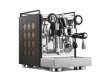
Stay on a reservoir when placement matters more than volume. A tank machine can sit anywhere there is a socket, which is what makes it workable in a rented kitchen, an office corner with no plumbing nearby, on a cart, or in a room you may reorganise next year. Plumbing commits the machine to a spot. That is a fair trade for a permanent bar and a poor one for a setup that needs to move.

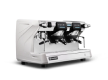
What plumbing in actually involves is worth being concrete about, because it is where projects slip. You need a supply line to the machine, a drain it can feed into, and filtration sitting between the mains and the boiler. Most commercial installs run a proper drain rather than a bucket, and the electrical requirement is usually a dedicated circuit rather than the nearest outlet. Get a plumber and an electrician to look at the space while it is still a plan.

Filtration is the part that is easiest to skip and most expensive to skip. Scale from untreated water is the most common reason a boiler fails early, and a plumbed machine runs continuously on whatever comes out of your mains. Test the supply first, then size the filter to what it actually reads and to the machine's flow rate. If you are still choosing the machine itself, our commercial espresso machines and prosumer espresso machines ranges cover both ends, and our under counter espresso machines collection covers building one into the cabinetry.

FAQ

Can any espresso machine be plumbed in?

No, and it is worth checking before you buy rather than assuming. Some machines are plumb-only, some are tank-only, and some are switchable or take a conversion kit. Where a kit exists it usually needs fitting properly rather than clipping on, so confirm the model's capability and what the conversion involves before you commit to a layout.

What does a plumbed machine need at the wall?

A cold water supply with a shut-off you can reach, a drain, and filtration between the two. Plus a power circuit sized to the machine, which for most commercial equipment means a dedicated one rather than a shared socket. Having a shut-off within reach matters more than it sounds on the day something leaks.

Do I need a drain, or can it run into a container?

For a home machine drawing lightly, a container is sometimes workable but becomes a chore nobody keeps up with. For anything on a working counter, plumb the drain properly. A machine that empties into a tub relies on someone emptying the tub, and that is the job that gets forgotten on the busiest morning.

Will plumbing in improve the coffee?

Indirectly. It does not change the brewing hardware, but it removes the pressure and temperature variation that comes from a pump drawing on a partly empty tank, and it means the machine is always working from the same water. Combined with proper filtration, that is a real consistency gain rather than a marketing one.

What filtration do I actually need?

Whatever your water test says, sized to the machine's flow. Hardness varies enormously between cities and even between sites in one city, so a cartridge chosen because it fits the cupboard is a guess. Manufacturers publish a hardness range they expect their equipment to run inside, and staying in it protects both the boiler and any warranty claim.

Is a plumbed machine sensible in a home kitchen?

It can be, if the machine stays put and you make coffee daily. The refilling genuinely disappears and the machine is always ready. What it costs you is flexibility and a plumbing job, so it suits a permanent setup far better than a kitchen you expect to redo. Filtration is not optional just because it is a home.

Can I plumb a machine in myself?

The water side is within reach of a confident DIYer where local rules allow it, but the drain and the electrical side are usually where it should stop. Any dedicated circuit is an electrician's job, and a badly made drain connection is the kind of mistake you find out about through a ceiling. Check what your local code requires first.

What happens if the water supply is turned off?

The machine loses its source and, depending on the model, will alarm or stop rather than run dry. That is a genuine argument for a shut-off you can reach and for knowing where it is before you need it. It is also why a site with unreliable water sometimes keeps a tank machine as a fallback.