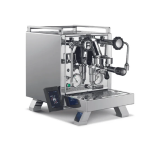
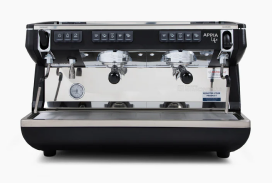
Under Counter Espresso Machines

An under counter espresso machine can mean two quite different things, and buyers arrive here wanting both. One is a commercial system where the boilers and pump are built into the cabinetry and only the group heads come up through the worktop. The other is a compact machine that simply fits beneath a standard kitchen cabinet without the hopper fouling the shelf. They solve different problems, cost very different amounts, and it is worth knowing which you mean before you go further. Both are covered here, and almost every decision after this one follows from which of the two you are actually shopping for.

Which Kind of Under Counter Setup Do You Actually Need?

The built-in commercial system is a design decision about the room. Moving the bulk of the machine below the worktop clears the sightline between the barista and the customer, which is why it turns up in specialty bars, hotel lobbies and restaurant floors where the counter is part of the room rather than a service hatch. It also frees the worktop for actual work. What it costs you is access: everything a technician needs sits inside cabinetry, so the joinery has to be designed for service before it is built.

The domestic version is a much simpler question about dimensions. Standard kitchen wall units sit a fixed height above the worktop, and plenty of otherwise suitable machines are too tall to slide under one, particularly once you add a hopper or need to lift the water tank lid. If that is your constraint, you are shopping on height and top-access rather than on architecture, and the answer is usually a compact machine rather than a built-in system.

Between the two sits a question worth asking either way: where does the water come from. A built-in system is plumbed as a matter of course, and a compact machine may be plumbed or run from a tank. Plumbing in removes refilling and holds pressure steadier, and it needs planning into the cabinetry alongside drainage. Our plumbed coffee machines collection covers that side of the decision on its own.

Capacity does not change because the machine moved. Group count and boiler size still follow from your busiest twenty minutes, not from the format, so size the machine first and choose the layout second. If a built-in system is what you are after, our commercial espresso machines range covers the conventional alternative worth weighing it against, and for a home counter our prosumer espresso machines collection is the better starting point.

FAQ

How much height do I need under a standard kitchen cabinet?

Measure it rather than trusting a spec sheet, because worktop to wall unit varies between kitchens. Then measure what the machine needs when it is being used, not when it is sitting still: lifting a water tank lid, fitting a hopper or opening a top-fill often needs more clearance than the machine's stated height. That last inch is what catches people out.

Is a built-in system harder to service than a normal machine?

The components are the same; the access is what changes. Cabinetry designed with service in mind, leaving room to pull the unit and reach connections, makes it routine. Cabinetry that boxed the machine in turns an ordinary job into carpentry. Decide this with your joiner at design stage rather than discovering it on the first service visit.

Does the format affect how the coffee tastes?

No. The brewing hardware and the way group temperature is managed do not change because the boiler sits lower. What changes is the room, the workflow and the service access. Anyone claiming the format itself improves extraction is overselling it.

Can I retrofit a built-in system into an existing counter?

Sometimes, but it is usually more disruptive than people expect, because water, drainage, power and a service route all have to be found in cabinetry that was not built for them. If the counter is already in place and you cannot rebuild it, a compact worktop machine is often the more sensible answer.

What does the installation need in place?

A water supply, a drain, and a power circuit sized to the machine, all routed into the cabinetry rather than run across a worktop. Plus an agreed way of removing the unit for service. Get a plumber and an electrician to look at the space while the counter is still a drawing, not after it is fitted.

Is this only worth it for commercial bars?

The built-in format earns its keep wherever sightlines or worktop space genuinely matter, which includes hotel lobbies and restaurant floors as well as cafes. In a home kitchen it is rarely the right answer: the cost and the cabinetry work are hard to justify when a compact machine solves the actual constraint, which is usually just height.

Do I still need somewhere for the grinder?

Yes, and it is the thing people forget when they picture a clear counter. The grinder still needs worktop space, clearance beneath its outlet for a portafilter, and to sit in the path the barista already walks. Freeing the counter of the espresso machine does not free it of everything else.

What water treatment should I plan for?

Filtration sized from a test of your actual supply, specified alongside the plumbing. Scale is the most common cause of an early boiler failure, and with the hardware inside cabinetry, replacing a scaled component is more disruptive than it would be on a worktop machine. The filtration matters more in this format, not less.