


Synesso S-Series Review: Temperature-Stable Espresso for High-Volume Cafes (2026)
|
|
Time to read 9 min
Your Cart
Your cart
Favorites





Shop by Brands

Shop by Brands
Shop by Brands


Shop by Brands


Shop by Brands
Shop by Brands

|
|
Time to read 9 min
Rating: 4.6/5. Best for: high-volume cafes and restaurants that need consistent, repeatable shots across multiple baristas during a rush. The Synesso S-Series (S200 and S300) pairs true multi-boiler architecture with PID temperature control and volumetric dosing, so shot quality holds steady group after group, all day. The trade-off is that this is a full commercial installation rather than a countertop plug-in, so you will need a dedicated 220V circuit and a professional setup before it ever pulls a shot.

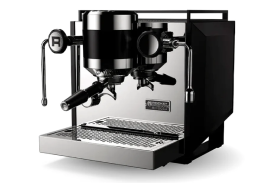
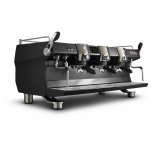
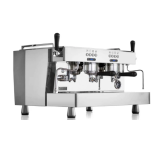
If your espresso tastes different from the first shot of the morning to the last pull during a Saturday rush, the problem is rarely your barista. It is usually the machine's boiler losing ground under sustained demand, drifting a degree or two just enough to throw off extraction. That inconsistency is exactly what pushed us to spend real bar time behind the Synesso S-Series, the brand's flagship multi-boiler line, refreshed for 2025 with updated exteriors and the same volumetric and temperature control that made Synesso's name. Available as the 2-group S200 or the 3-group S300, this is a machine built specifically to answer the question every busy cafe eventually asks: how do we keep every shot tasting like the first one?
Multi-boiler architecture on both the S200 and S300, so steaming and brewing draw from separate boilers instead of fighting over one heat source
PID temperature control for tight, repeatable setpoint holding shot after shot
Volumetric dosing with one-tap recipe control for consistent shot volume regardless of who is pulling the lever
Low-profile design that sinks further into a bar top than a lot of comparably powerful 2 and 3-group machines
Handheld controller for real-time preinfusion and recipe adjustments without opening a service panel
Automated backflush cleaning and programmable 9-bar purge buttons
Available in 2-group (S200) or 3-group (S300) configurations, both in black or white

Cafes and restaurants pulling hundreds of shots a day that need shot-to-shot consistency across multiple baristas
High-volume bars where one barista needs to steam milk while another pulls a shot without a temperature dip, which is where the 3-group S300 earns its keep
Owners who want volumetric, repeatable recipes rather than manual timing, so training a new hire does not mean inconsistent espresso for weeks
Bars that can dedicate real counter space and a 220V commercial circuit to a permanent installation
NOT for: home users, single-barista carts, or anyone who wants a plug-and-play machine on a standard outlet. If you want Synesso's temperature stability and build quality in a footprint suited to a house or a single-group setup, look at the Synesso ES1 instead.
The S-Series earns its reputation from a handful of engineering choices that show up every single time you pull a shot, not just on a spec sheet. Here is what actually matters once the machine is on your bar.

The pain point it solves: Manual timing means every barista pulls a slightly different shot, and a busy shift makes that worse. What makes it great: The S-Series doses by volume through a flowmeter gated by the volumetric control board, not by a timer, so a programmed recipe delivers the same yield at 7am or mid-rush, and one-tap controls make dialing in a new recipe fast. The benefit: Shot volume stops depending on who is standing at the machine, the single biggest lever for consistency across a multi-barista team.
The pain point it solves: Single-boiler and even many heat-exchanger machines let brew temperature drift when the steam side is drawing hard, which is exactly when a cafe is busiest. What makes it great: Synesso was built around this problem from day one. The S-Series keeps separate, PID-controlled boilers for brewing so a hard-working steam side does not rob heat from the group head, and PID control means the machine is constantly correcting rather than just switching a heating element on and off around a wide band. The benefit: Brew temperature holds inside a tight window through a genuine rush, the difference between a shot that tastes the same at 8am and at noon and one that does not.
The pain point it solves: On a lot of multi-group machines, pulling a shot while a second barista steams milk still puts a small dent in brew temperature. What makes it great: The 3-group S300's boiler capacity and wattage headroom, 2500W versus the S200's 2000W, is sized so steaming and brewing can happen at the same time without one starving the other. The benefit: On a busy 3-group bar with two or three people working at once, this is what actually keeps the queue moving during a rush.

The pain point it solves: A tall machine eats into sightlines and overhead cabinet space behind a bar. What makes it great: The S-Series keeps a low-profile design, 17.5 inches tall on the S200 and 16.9 inches on the S300, so it sinks further into a countertop cutout than a lot of comparably powerful machines. The benefit: Commercial-grade output without giving up the sightline to your customers or the shelf space above the machine.
The pain point it solves: Cheap steam wands run hot to the touch and fight a barista's wrist angle over a long shift of milk steaming. What makes it great: The S-Series uses ambidextrous, cool-to-the-touch steam wands and actuators, so both left and right-handed baristas get a comfortable angle. The benefit: Faster, more comfortable milk texturing, which adds up across a full day of drinks.
The pain point it solves: Cleaning routines that depend on a barista remembering the right sequence get skipped during a rush, and skipped cleaning shows up in the cup within days. What makes it great: Programmable 9-bar purge buttons and an automated backflush cleaning program turn the routine into a one-tap job, and the new drip tray is deeper and easier to pull for a faster wipe-down. The benefit: Cleaning happens on schedule because it takes seconds, not because someone remembered a manual routine. Pair it with the right water filtration and cleaning supplies and scale stays out of the boiler entirely.

The pain point it solves: Adjusting preinfusion or a recipe on a lot of commercial machines means opening a panel or digging through a menu mid-shift. What makes it great: The S-Series ships with a handheld controller for real-time preinfusion and recipe adjustments without touching the machine's internals. The benefit: Dialing in a new bean or fixing a recipe that is running fast or slow takes a minute, not a service call.
Put together, these are not isolated gimmicks. They are the same idea applied to dosing, temperature, footprint, and cleaning: take the variables that depend on a tired barista at 2pm and make the machine handle them instead.

|
Pros |
Cons |
|
True multi-boiler design holds brew temperature during simultaneous steam and brew |
Requires a dedicated 220V circuit and professional installation, not a plug-in upgrade |
|
Volumetric dosing delivers consistent shot volume across every barista on shift |
Volumetric only, with no native brew-by-weight mode for shops standardizing on gravimetric dosing |
|
Handheld controller makes real-time recipe changes fast |
At 152 to 225 lbs depending on configuration, it is not something you move on your own |
|
Programmable purge buttons and automated backflush simplify daily cleaning |
Low-profile design still needs real counter depth (24 inches) and a cutout to fit well |
|
Available in 2-group and 3-group configurations to match cafe volume |
Premium commercial build sits at a price tier well above a prosumer machine |
Specifications below cover both the 2-group S200 and 3-group S300 configurations, pulled directly from Pro Coffee Gear's current product listing.

|
Specification |
S200 / S300 |
|
Manufacturer |
Synesso |
|
Boiler Type |
Multi Boiler |
|
Number of Group Heads |
2 (S200) / 3 (S300) |
|
Steam Boiler Capacity |
7.7 L (S200) / 12.3 L (S300) |
|
Length |
27.6 in (S200) / 37 in (S300) |
|
Depth |
24 in (both) |
|
Height |
17.5 in (S200) / 16.9 in (S300) |
|
Voltage |
220 V (both) |
|
Amperage |
28 A (S200) / 36 A (S300) |
|
Wattage |
2000 W (S200) / 2500 W (S300) |
|
Weight |
152 lbs (S200) / 225 lbs (S300) |
|
Certifications |
CE, UL, ETL, NSF |
Two comparisons come up constantly when cafes are shortlisting the S-Series.
Vs. the Synesso ES1: The Synesso ES1 is Synesso's premium home machine, built with the same temperature-stability philosophy in a single-group footprint meant for a kitchen counter, not a commercial bar. If you love what Synesso stands for but do not run a cafe, the ES1 gets you there without a commercial installation.
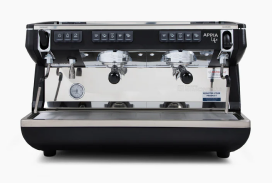
**Vs. the Nuova Simonelli Appia Life:** Appia Life is also a volumetric commercial machine, built around a Soft Infusion pre-infusion system and a four-hole steam wand. It is a legitimate alternative if pre-infusion shaping matters more to your bar than true multi-boiler independence. The S-Series' case is its dedicated brew and steam boilers plus PID control, the more direct answer if simultaneous steam and brew without a temperature dip is the priority.
Synesso was established around 2004 in Seattle, built specifically as a reaction to the temperature instability that plagued espresso machines at the time. That single-minded focus on heat management is still the throughline in every S-Series machine on the line today: heavy-built, multi-boiler, and engineered to hold its setpoint under real bar pressure rather than just on a spec sheet. Our time behind the S-Series for this review was spent pulling shots back to back, not reading a datasheet, and the temperature stability the brand is known for held up exactly as advertised.
Live, dynamic pricing on the product page, so you always see the current rate rather than a number that may already be outdated
Free shipping within the contiguous United States
A 24-month parts warranty backed by Pro Coffee Gear's own commercial support team
Lifetime Pro support, including pre-install consultation, ongoing troubleshooting, and equipment strategy help long after your warranty ends
These are the things that actually change your experience owning a commercial machine, not just the invoice. Free shipping is handled, your warranty is backed by a team that answers the phone, and lifetime Pro support means you are not on your own the first time your install or your grind needs a second opinion. That is worth more over the life of a multi-boiler machine than a lower number at checkout from a seller who disappears once your card is charged.
If you are running a cafe or restaurant bar that lives and dies on consistency during a rush, the Synesso S-Series earns its place. The multi-boiler architecture, PID control, and volumetric dosing are not marketing terms here, they are the actual reason shots taste the same at the start of a shift and the end of one. Skip it if you are not ready for a 220V commercial install, or if your volume genuinely does not need a dedicated brew and steam boiler working independently. For everyone else, shop the Synesso S-Series or book a consultation with Pro Coffee Gear's team to talk through which configuration, S200 or S300, fits your bar.
If your volume suits one or two group heads and you value shot-to-shot consistency more than raw throughput, the 2-group S200 is sized for exactly that. It is a commercial investment, so it makes the most sense once inconsistent espresso is actually costing you customers, not for a shop still testing the waters.
Like most multi-boiler commercial machines, plan for a genuine warm-up period, typically in the 20 to 30 minute range, before both boilers are fully at setpoint. Most cafes leave it running through opening prep rather than firing it up right before the first customer.
Daily backflushing using the programmable purge buttons, a wipe-down of the steam wands after each shift, and regular water filtration checks are the core routine, since scale buildup is the main long-term threat to any boiler-based machine. Synesso's automated backflush program handles the actual cleaning cycle.
It is built for cafes, restaurants, and multi-barista bars that need a machine to hold its temperature and shot volume steady regardless of who is working the group head or how busy the queue gets. It is not aimed at single-barista home setups, which is what the Synesso ES1 exists for.
The S200 is the 2-group configuration with a 7.7 L steam boiler, sized for most single or dual-station bars. The S300 steps up to 3 groups and a 12.3 L steam boiler with more wattage, specifically so a busier bar can steam and brew at the same time without a temperature dip. Choose based on your group-head count and whether simultaneous steaming actually happens on your bar.
Our team can help you find the best fit based on your space, volume, and budget.
Talk to a Specialist

