


Slayer Espresso V3 Review: Total Manual Flow Control on a Commercial Multi-Boiler (2026)
|
|
Time to read 10 min
Your Cart
Your cart
Favorites





Shop by Brands

Shop by Brands
Shop by Brands


Shop by Brands


Shop by Brands
Shop by Brands

|
|
Time to read 10 min
Rating: 4.5 / 5 | Best for: the specialty cafe, training program, or serious espresso purist who wants total manual command over flow rate on a commercial multi-boiler.
The Slayer Espresso V3 hands you the one variable most machines take away: direct, needle-valve control over water flow rate, backed by independent pre-heated brew boilers and per-group PID control. It rewards a barista who wants to shape every shot by hand, as long as you can live with having no programmable pressure profile or volumetric memory to fall back on when the team changes.

If you have ever pulled two shots back to back on the same machine and watched them taste different with no way to explain why, the issue is not always your technique. Sometimes it is the machine, quietly making decisions about flow rate that you never get a say in. I have spent time behind the Slayer Espresso V3 pulling shots across different roasts, and it approaches that problem from the opposite direction of most commercial machines: it puts flow rate directly under your hand, every shot, with no software layer in between. It is built for the barista who wants to build consistency themselves, using a needle valve and their own palate.
Flow control: manual needle valve, restricts water flow rate for finer-grind, hand-shaped shots
Boiler system: multi-boiler, individual pre-heated brew boiler per group plus a dedicated steam boiler
Temperature control: PID, adjustable in 0.1 degree increments per group head
Pre-infusion: built into the manual flow curve to reduce channeling
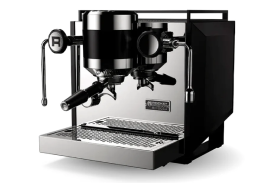
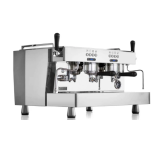
Design: shot mirrors for visual extraction feedback, lever-actuated steam handles
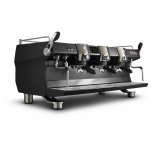
Configurations: 2 Group or 3 Group
Certification: CE, NSF for commercial use
This is a machine for people who see flow control as the point, not a chore. It rewards hands-on skill over automated repeatability.

Specialty cafes: ideal if your bar wants to showcase single-origin and light roasts through hand-shaped flow control, not a preset recipe.
Training programs and competition-focused shops: excellent for teaching baristas to read and shape extraction in real time using the needle valve and shot mirrors.
Serious espresso purists: a strong fit if you specifically want the discipline of manual flow control rather than a machine that automates it for you.
NOT for: cafes that need programmable, repeatable recipes across a rotating team, or buyers who want volumetric dosing out of the box. Consider the Slayer Steam LP instead, which adds a paddle actuator with recordable, playback shot profiles on the same multi-boiler platform.
Every feature on the Espresso V3 points the same direction: put more of the shot in the barista's hands, and build the hardware stable enough that manual control is actually worth using.

The pain point it solves: Most espresso machines lock you into a single fixed flow rate, so you cannot shape how water moves through the puck for a specific bean or roast, and every shot gets treated the same.
What makes it great: The V3's needle valve puts flow rate directly under your hand. Restrict it for a finer grind and a gentler extraction, or open it up mid-shot the way a flow-profiling competitor would, with nothing automated in between.
The benefit: Real, moment-to-moment control over extraction instead of a fixed curve the machine applies for you. It is the most direct flow-shaping tool on a commercial machine.
The pain point it solves: On a shared-boiler machine, brew temperature drifts as you pull shots back to back, so the fourth shot in a rush tastes different from the first.
What makes it great: Each group runs its own pre-heated brew boiler, so temperature does not have to recover between shots, and PID control adjustable in 0.1 degree increments per group head lets you hold a specific brew temperature and trust it.
The benefit: Genuinely stable temperature at the puck, shot after shot, even when the bar is busy. This is the foundation that makes manual flow control worth trusting.
The pain point it solves: On a machine with one shared boiler, brewing and steaming compete for the same heat, so a busy milk order can pull temperature away from the next shot.
What makes it great: The Espresso V3 separates steam from brew entirely, with a 7.4 L steam tank on the 2 Group and a 12 L steam tank on the 3 Group, independent of the 1.7 L brew boilers per group, so espresso and milk happen at the same time without either one robbing the other.
The benefit: No slowdown during a milk-heavy rush, and no compromise on shot quality to get there.

The pain point it solves: A dry puck hit with full pressure immediately tends to channel, creating uneven extraction that shows up as sour or thin notes even when your dose and grind are right.
What makes it great: Because flow is entirely manual, pre-infusion is something you build into the start of the pull yourself, softly wetting the puck before opening the valve further, giving single-origin and light roasts room to develop instead of blowing through the coffee bed.
The benefit: More even saturation, better crema, and more balanced shots on the beans that are hardest to extract well.
The pain point it solves: You cannot fix what you cannot see, and many machines give a barista no real feedback on extraction while it is happening, plus steam wands that turn a long shift into a wrist workout.
What makes it great: Shot mirrors let you watch extraction happen in real time, judging flow and color as the shot pulls rather than guessing after the fact, while lever-actuated steam handles are built for repeated use without the fatigue of a stiff knob.
The benefit: Faster in-the-moment adjustments, faster training for new baristas, and less physical strain during a long service.

The pain point it solves: Some machines try to be everything at once and end up compromising build quality or control to fit a smaller footprint or a lower price point.
What makes it great: The Espresso V3 does not compromise. It is available in 2 Group or 3 Group configurations, a full commercial platform with semi-automatic operation and CE and NSF certification, with every feature above scaled to whichever group count your bar needs.
The benefit: A machine that scales with your volume without diluting the manual control that makes it worth choosing, whether you run a 2 Group counter or a 3 Group bar at full tilt.
This is a plumbed-in commercial machine, so plan the install: a 220 to 240V supply, drawing 26 to 29A on the 2 Group and 33 to 36A on the 3 Group, with CE and NSF certification for commercial use. Pro Coffee Gear's own installation guidance recommends a water filtration system to protect the boilers, plus a pressure regulator if your incoming pressure runs high; browse water filtration and cafe accessories to round out the install. Kept on treated water with regular backflushing and gasket changes, a Slayer is built to serve behind a bar for years.
|
Pros |
Cons |
|
Needle-valve flow control gives you real, hands-on shot shaping |
No programmable pressure profiles or volumetric dosing memory, repeatability depends entirely on the barista's skill |
|
Independent pre-heated brew boiler per group for rock-solid temperature stability |
Commercial 220-240V install and multi-group footprint, not a countertop option |
|
Separate multi-boiler steam capacity for simultaneous brewing and steaming |
Manual flow control has a genuine learning curve for new or rotating staff |
|
PID temperature control adjustable in 0.1 degree increments per group |
Premium commercial price tier |
|
Shot mirrors and ergonomic steam handles built for training and long shifts |
Only 2 Group or 3 Group configurations, no smaller single-group option |
Full specifications, from the Slayer Espresso V3 product page.
|
Spec |
Detail |
|
Manufacturer |
Slayer |
|
Boiler Type |
Multi-Boiler |
|
Number of Group Heads |
2 or 3 |
|
Steam Boiler Capacity (2 Group) |
7.4 L steam tank, 1.7 L x2 brew tanks |
|
Steam Boiler Capacity (3 Group) |
12 L steam tank, 1.7 L x3 brew tanks |
|
Length |
30.5" (2 Group) / 40.5" (3 Group) |
|
Depth |
26.5" |
|
Height |
17" |
|
Voltage |
220-240V |
|
Amperage |
26-29A (2 Group) / 33-36A (3 Group) |
|
Wattage |
5.7-6.9 kW (2 Group) / 7.3-8.7 kW (3 Group) |
|
Weight |
220 lbs (2 Group) / 305 lbs (3 Group) |
|
Certification |
CE, NSF |

Against its own sibling, the Slayer Steam LP, the two share the same multi-boiler foundation but split on philosophy. The Steam LP adds a paddle actuator that can record a recipe during dialing-in and play it back on demand, so once a shot is dialed, any barista can reproduce it. The Espresso V3 skips that layer and keeps flow control fully manual through the needle valve, every shot. Choose the Steam LP for a repeatable safety net across your team, and the Espresso V3 if manual mastery is the actual goal. The Steam LP also offers finish options the Espresso V3 does not, and its entry configuration sits a step below the Espresso V3's price tier.
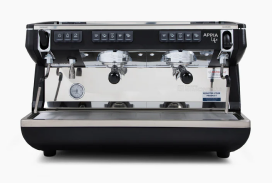
Against a commercial multi-boiler from another brand, the Rocket R Nine One takes the opposite approach: up to five programmable pressure profiles per group, volumetric dosing, and a touch display, all for a repeatable shot with less reliance on any one barista's touch. The Espresso V3 has no equivalent because it is not trying to be one. Pick the R Nine One to train variance out of your team, and the Espresso V3 if you want a machine that responds directly to skilled hands. Browse the full Slayer machines range to compare configurations.
Slayer is a Seattle-based manufacturer credited with starting the modern flow-profiling movement in espresso, built around patented flow control that turned shot shaping into something a barista could do by hand rather than a preset. The Espresso V3 continues that idea on a full commercial multi-boiler platform, and this review is based on hands-on time behind the machine, pulling shots across different roasts and working the needle valve through a full extraction, not a rewrite of the spec sheet.
The Slayer Espresso V3 is available at Pro Coffee Gear in 2 Group and 3 Group configurations, with financing options available at checkout. The product card above and below pulls current pricing live, so it always reflects what is actually available.
Live, dynamic pricing on both 2 Group and 3 Group configurations, plus financing options at checkout
Free shipping within the contiguous US, with an install package included
A 15-month parts and labor warranty backing every machine
Backed by lifetime Pro support: pre-install and install consultation, ongoing troubleshooting, and equipment strategy sessions with our team as your program grows
Browse the full Slayer machines range to compare configurations
On a machine at this level, what you are really paying for beyond the hardware is the team behind it: install guidance before the machine arrives, a straightforward warranty covering parts and labor, and ongoing access to people who actually know the equipment when your program needs troubleshooting or a next step. That is a materially different purchase than buying the same machine from a seller who disappears once the shipping label prints.
The Slayer Espresso V3 is for the specialty cafe, training program, or serious espresso purist who wants total manual command over flow rate and treats that as the point, not a hassle. Independent pre-heated brew boilers, per-group PID control and true multi-boiler separation give it the stability to make that manual control worth trusting. Skip it if you need programmable, repeatable recipes across a rotating team, and look at the Slayer Steam LP instead. For the buyer who actually wants it, the Espresso V3 is one of the purest expressions of manual espresso craft you can put behind a commercial bar. Check the live price on the Slayer Espresso V3 page, or book a consultation with our team to talk through group configuration and install requirements before you order. Compare it with the other multi-boiler options in our best commercial espresso machine collection before you decide.
For a specialty cafe, training program, or barista who genuinely wants manual flow control, yes. You get a needle valve for real shot shaping, independent pre-heated brew boilers and per-group PID control on a full multi-boiler build. It asks more of the operator than a profiling machine does, so it is not the right fit if you want programmable repeatability out of the box.
Not in the programmable sense. The Espresso V3 shapes extraction through its needle valve, entirely by hand, rather than through saved digital profiles. You control flow rate directly for every shot. If you want a recordable, playback-style profile on the same multi-boiler platform, the Slayer Steam LP is built for that.
Give it real warm-up time before service. Like any multi-boiler commercial machine, the brew boilers and the steam boiler both need to reach full temperature before shots and steam pressure are consistent, so most cafes build a fixed warm-up window into their opening routine rather than rushing shots the moment it powers on.
Water quality matters most. Pro Coffee Gear's own installation guidance recommends a water filtration system to protect the boilers, plus a pressure regulator if your incoming water pressure is high. Beyond that, plan on regular backflushing and gasket changes like any commercial group head, and watch your grind, since the needle valve interacts directly with grind size and flow rate.
Cafes with high staff turnover that need a new barista pulling a consistent shot on day one, or anyone who wants volumetric dosing and programmable profiles without a manual learning curve. In either case, the Slayer Steam LP or the Rocket R Nine One are worth comparing first.
Our team can help you find the best fit based on your space, volume, and budget.
Talk to a Specialist

